
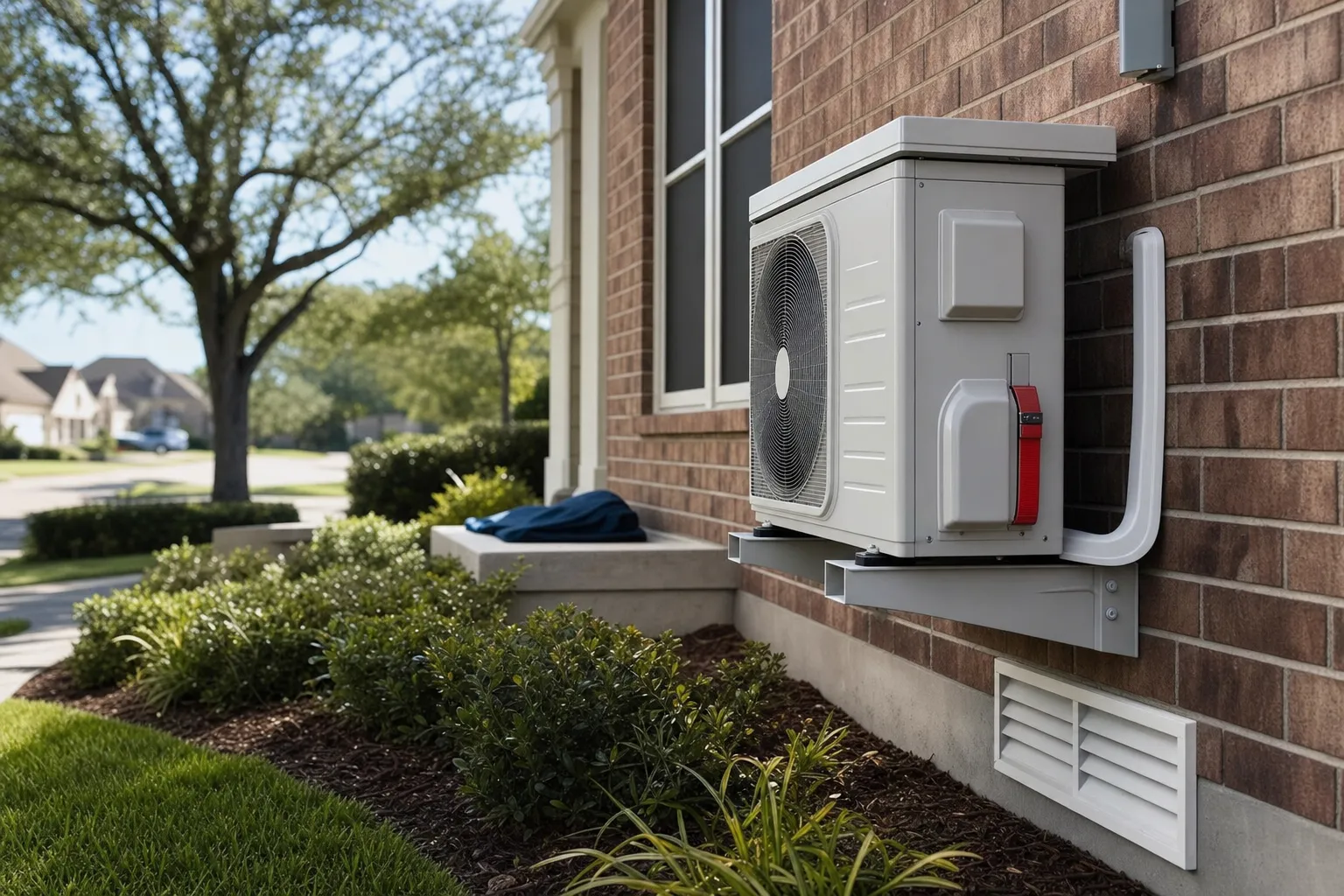
If you are facing an AC compressor issue, ask whether the technician has diagnosed the compressor, confirmed the refrigerant charge and ruled out electrical or airflow causes. We recommend asking for the specific fault, the repair options, and the performance you should expect after work is done.
Why asking the right questions matters for compressor problems
An AC compressor is the heart of your outdoor condensing unit, and compressor problems affect cooling capacity, energy use and equipment longevity. Owners in Houston need clear answers because high outdoor temperatures increase strain on compressors during the cooling season, and repairs that miss the real cause lead to repeat failures.
We handle compressor issues regularly as an HVAC contractor serving Houston. Our goal with every visit is a fast, accurate diagnosis, transparent options and repairs that get systems back to efficient operation while protecting the rest of the system.
What an AC compressor problem looks like
Before you start repair, understand the common symptoms so you can describe what you are seeing. Typical signs include reduced cooling, the outdoor unit not running, loud or unusual noises from the condenser, or tripped breakers that return after resetting.
- System blows warm air even when the blower runs.
- Outdoor unit cycles on and off quickly, or does not start.
- Hissing, clanking, or grinding sounds from the condenser area.
- Higher than normal electric bills after the symptoms began.
These symptoms can come from the compressor itself, but they can also be caused by low refrigerant, failed capacitors, bad contactors, restricted airflow, clogged coils or electrical issues. A thorough diagnosis separates the root cause from the symptoms.
Immediate questions to ask before any repair begins
Ask these questions early so the diagnosis and suggested work match your expectations and budget.
- What exactly is the diagnosis. Request the specific fault, not just a general statement that the compressor is bad. Ask whether the diagnosis is based on gauges, electrical testing, and visual inspection.
- What tests were performed. Confirm whether the technician checked refrigerant pressures, measured amperage draw, inspected capacitors and contactors, and verified airflow across the evaporator coil.
- Could something else be causing these symptoms. Ask if poor airflow, a failing capacitor, a stuck expansion device, or a refrigerant leak could explain the problem instead of compressor failure.
- Repair or replace, and why. Request a clear explanation of the repair option, what parts will be replaced, and why replacement would be recommended instead of repair.
- How will you protect the rest of the system. If a compressor is replaced, ask how the refrigerant circuit and oil will be handled, and whether the outdoor coil, metering device and indoor coil are compatible with a new compressor.
- What performance should I expect afterward. Get realistic estimates for restored cooling capacity, efficiency and noise levels after the work is completed.
Questions about costs, timelines and parts
Cost and timing are important, but avoid accepting a vague line item. Ask for a breakdown and the logic behind the recommendation.
- What parts are required, and are they new factory parts or remanufactured components.
- How long will the work take, including any evacuation, recovery and system testing steps.
- Will the refrigerant need to be recovered and recharged, and which refrigerant will be used.
- Is any additional work likely after the compressor is opened, such as replacing the receiver, filter drier or expansion device.
For system compatibility, ask whether the replacement compressor is matched to the outdoor condenser and indoor coil. Mismatched components can reduce efficiency and shorten equipment life.
We follow industry practices to protect the system during compressor work, including recovery of refrigerant, oil analysis when needed, and proper dehydration and charge procedures to prevent moisture damage.
How we diagnose compressor problems at Cool Care Heating and Air Conditioning
When we inspect suspected compressor problems in Houston, our technicians follow a standard sequence so you get a reliable diagnosis you can trust.
- History and symptom check. We ask when the symptoms started, whether the system ran intermittently, and any recent service history.
- Visual inspection. We look for oil stains, damaged wiring, burned terminals, rattles or visible leaks around the condenser and line set.
- Electrical testing. We measure compressor amperage, check capacitors and contactors, and test voltage at the unit to rule out power issues.
- Pressure diagnostics. We use manifold gauges to read refrigerant pressures under operating conditions. Low or high pressures narrow the possible causes.
- Operational verification. We verify indoor airflow, run temperature split checks, and monitor the system through a controlled run to watch how it responds.
This process aligns with accepted industry guidelines from trade groups such as the Air Conditioning Contractors of America, which recommend methodical diagnostics before replacing major components.
For background on the HVAC contractor role, see the Heating, Ventilation, and Air Conditioning overview on Wikipedia and for licensing details in Texas consult the Texas Department of Licensing and Regulation.
When repair makes sense and when replacement is the right move
Deciding to repair or replace a compressor depends on age, the nature of the failure, refrigerant type and total equipment condition.
- If the compressor failed electrically but the motor housing and shell are sound, a compressor swap or motor replacement may be viable.
- If the compressor has suffered mechanical damage or internal contamination, a replacement and a full system flush and drier change are usually required.
- Older systems using phased out refrigerants require careful evaluation because newer compressors may not be compatible without additional component changes.
- If the outdoor unit is near the end of its useful life or the indoor coil shows corrosion, replacing the entire condensing unit and matched indoor components may be more cost effective long term.
When replacement is recommended, ask whether new components will be matched and charged to manufacturer specifications, and whether the work includes leak repair, filter drier replacement and vacuuming the system to remove moisture.
Safety, refrigerant rules and documentation to request
Because refrigerants are regulated and handling requires licensed technicians, ask for documentation of refrigerant recovery and charging, and for a written summary of tests and results.
- Request a written diagnosis and a list of tests performed, including measured pressures and measured motor amperage.
- Ask whether refrigerant was recovered to a certified cylinder and how much was reclaimed or added.
- Confirm that the work will be performed by technicians who meet local licensing rules. In Texas, HVACR licensing is administered by the Texas Department of Licensing and Regulation.
Watch out: Replacing a compressor without addressing a refrigerant leak or contamination can lead to a second failure. Always ask how the technician will prevent repeat problems.
Questions about warranties, parts and long term outcomes
Warranty terms vary by manufacturer and part type. Ask for specifics, including whether labor is covered and what happens if a replaced compressor fails within the warranty period.
- Which parts carry a manufacturer warranty and which parts carry a service warranty.
- Is the compressor new, remanufactured or a reconditioned exchange unit.
- How will future maintenance be handled to protect the new compressor, for example seasonal tune ups and filter changes.
We tell customers in Houston that regular preventive maintenance reduces the chance of compressor failure. See our Preventive Maintenance Checklist for recommended seasonal steps to keep your system healthy, and review Signs Your AC Needs Repair if you are unsure whether it is time to call in a technician.
How to evaluate estimates and proposals
When you receive an estimate, make sure it is itemized and ties parts to the diagnosis. A clear proposal helps you compare options without guessing what is included.
- Look for an itemized parts list and labor estimate, and an explanation of why each part is necessary.
- Ensure the proposal lists refrigerant type and quantity when relevant.
- Check that the proposal includes testing and a post repair verification step, such as run time observation and temperature split readings.
Pro tip: Ask the technician to show you test readings and to explain what a normal pressure and amperage range looks like for your system. That helps you understand whether the results match the diagnosis.
Maintenance steps that reduce compressor risk
While compressor work should be done by professionals, routine care reduces the chance of failure and improves efficiency.
Routine maintenance checklist
- Regular replacement of air filters at recommended intervals to maintain airflow.
- Seasonal indoor coil and outdoor coil cleaning to prevent reduced heat transfer.
- Annual electrical checks on capacitors, contactors and wiring connections.
- Checking refrigerant charge as part of a tune up, and testing for leaks where appropriate.
We cover this work as part of our HVAC maintenance services. A proactive maintenance program helps catch slowly developing compressor issues before they become emergencies.
Local considerations for Houston homeowners and building managers
Houston summers put heavy demand on air conditioning systems. High ambient temperatures and high humidity can accelerate wear on compressors. That means timely diagnosis and effective repairs matter more here than in milder climates.
As a local HVAC contractor, Cool Care Heating and Air Conditioning works across Houston neighborhoods and nearby communities to keep systems tested, repaired and maintained to handle regional loads. If you want to review our service area and locations, see our locations page.
Key takeaway
Ask for a clear, evidence based diagnosis, the tests performed, repair versus replacement reasoning, refrigerant handling details and documentation of parts and post repair testing. Clear questions help you avoid repeat failures and get predictable performance after compressor work.
Frequently asked questions
How do I know if the compressor is really the problem?
Many symptoms that look like compressor failure are actually caused by low refrigerant, electrical issues, or poor airflow. A reliable diagnosis uses pressure readings, amperage measurements, and visual inspection. We recommend asking the technician which of these tests they performed and to show the readings.
Can a compressor be repaired or does it have to be replaced?
Some compressor failures can be repaired, for example when a single electrical component fails and the motor itself is undamaged. However, mechanical failures or contamination usually require replacement and a system flush. Ask for the specific reason a repair or replacement is recommended.
Will replacing the compressor require changing other parts of my system?
Often yes. Replacing a compressor can require a new filter drier, replacement of the metering device if mismatched, and a vacuum and recharge to remove moisture. If the refrigerant type is being changed, additional component changes may be required to ensure compatibility.
What documentation should I receive after the repair?
Request a written diagnosis, the tests performed with measured values, a parts list, refrigerant recovered or added, and any manufacturer warranty details. This documentation helps with future service and with warranty claims if needed.
Who regulates HVAC licensing in Texas?
Licensing for HVAC and refrigeration work in Texas is handled by the Texas Department of Licensing and Regulation. It is appropriate to ask whether the technicians working on your system meet state licensing requirements.
Where to learn more and check our local presence
Read reviews and get directions on our Google Business Profile, and learn more about compressor problems and system care on related pages on our site.