
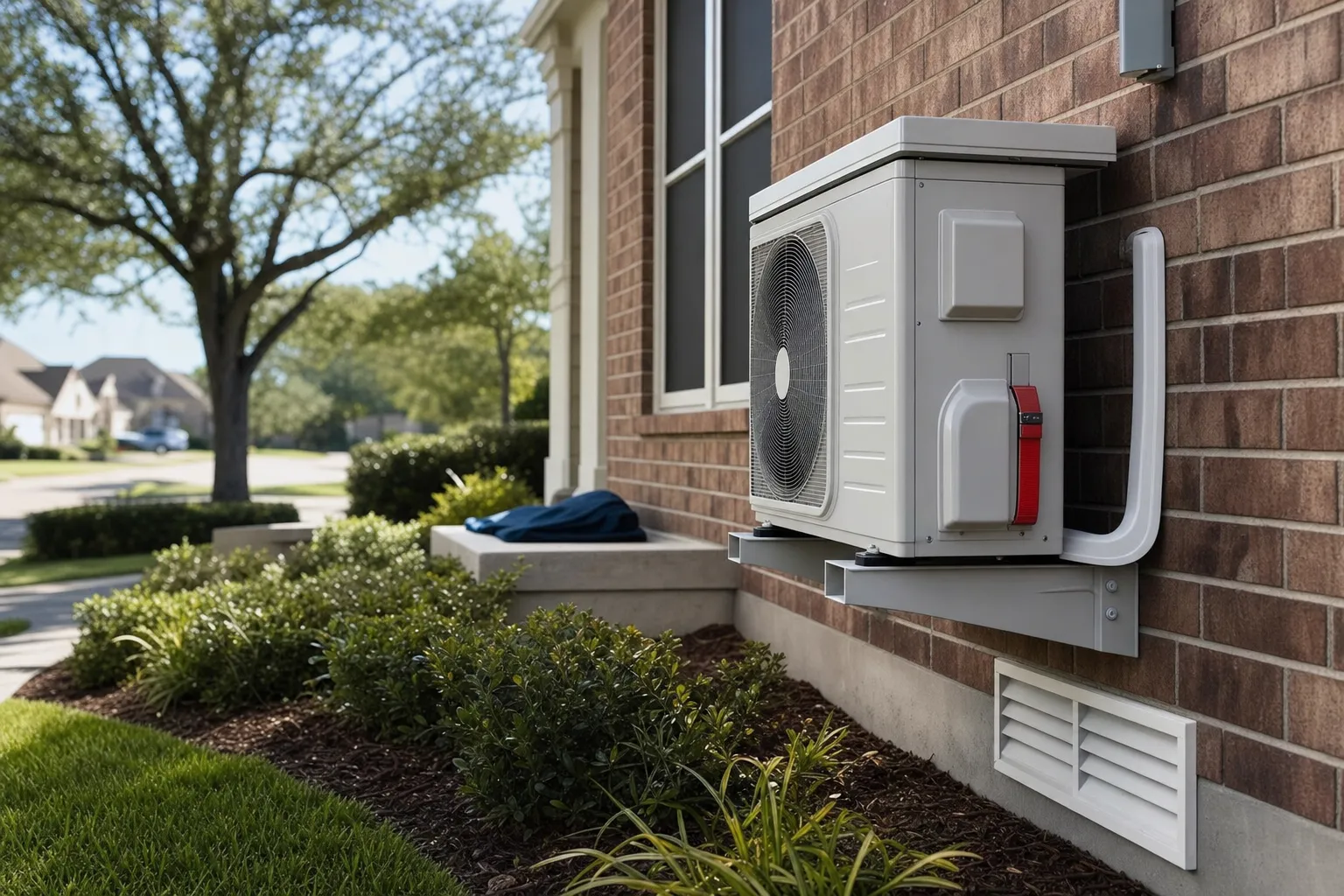
If you are deciding between a ductless mini split and a central air conditioning system in Houston, the short answer is this: choose a ductless mini split when you need precise room by room control, minimal installation disruption, or you do not have usable ductwork, and choose central air conditioning when you want whole house cooling through existing ducts, consistent airflow between rooms, or a solution that integrates with a central heating system. We explain the how, why and what to expect in Houston so you can make an informed decision.
What is this topic
We are comparing two common approaches to cooling and heating buildings in Houston. A ductless mini split uses one or more small indoor units mounted on walls or ceilings, connected to an outdoor compressor by a refrigerant line and a small conduit. A central air conditioning system uses a central outdoor condenser and an indoor air handler or furnace, distributing conditioned air through a network of ducts to vents in each room.
Both systems remove heat and, when paired with a heat pump, provide heating. The main differences are how they move air, how they are installed, how you control zones, and how they affect indoor air quality and humidity.
Why this choice matters in Houston
Houston has long, hot summers with high humidity. That combination affects comfort, energy use and the way systems remove moisture. The local housing stock ranges from older bungalows and converted storefronts, to modern slab homes and multifamily units. Because many Houston properties have limited or inefficient ductwork, the right system choice often depends on the building type, your comfort priorities, and how much disruption you can tolerate during installation.
We consider these local realities when we evaluate which system fits a house, apartment or commercial space in Houston, and we balance cooling capacity, dehumidification, and ongoing maintenance needs against installation complexity and operational cost.
Key concepts to understand
- SEER and efficiency. Seasonal energy efficiency ratings measure how much cooling a system delivers per unit of energy. Higher SEER usually means lower running costs, but real savings depend on installation quality and usage patterns.
- Ductwork losses. Central systems lose cooling through leaky, poorly insulated, or improperly sized ducts. In Houston, duct losses worsen humidity control and raise energy use.
- Zoning and room control. Ductless systems give room level control without dampers or zone panels. Central systems require zoning equipment to achieve similar control.
- Dehumidification. Removing moisture is as important as lowering temperature in Houston. System sizing, run time and refrigerant cycle affect how well a system controls humidity.
- Heat pump versus straight cooling. Many modern systems are heat pumps that provide both cooling and heating. In Houston, heat pumps are common for efficient year round comfort.
- Maintenance needs. Filters, coils, condensate drains and refrigerant charge need regular attention. Access and serviceability differ between ductless and central systems.
How ductless mini splits work and where they make sense
Ductless mini splits consist of an outdoor compressor and one or more indoor units. Each indoor unit has its own thermostat or control, letting you heat or cool individual rooms independently. Installation requires a small penetration through the wall for refrigerant lines and electrical connections, which usually means less demolition than adding ducts.
Advantages we see for Houston customers
- Room by room control reduces wasted cooling in unused spaces, which can lower operating hours.
- Minimal disruption during installation compared with installing new ductwork.
- Works well in additions, garages converted to living space, historic homes with no practical duct route, and multi family units where duct work would be invasive.
- Modern ductless units can have high SEER ratings, and many manufacturers design them to handle humid climates.
Limitations and what to watch for
- Multiple indoor units are required to cool an entire home, which raises equipment and installation complexity compared with a single central system.
- Indoor units are visible on walls or ceilings, which affects aesthetics and placement choices.
- Dehumidification depends on run time and proper sizing; short cycling can leave humidity high in Houston.
- Some ductless systems use refrigerants and components that require trained technicians for service and repair.
How central air conditioning works and where it makes sense
Central air conditioning conditions the whole house through ductwork. An outdoor condenser works with an indoor air handler or furnace, pushing air through ducts to vents. Central systems pair well with forced air heating when both functions are required.
Advantages we see for Houston customers
- Uniform airflow and temperature across the house when ducts are well designed and sealed.
- Indoor equipment is often centralized, which can simplify maintenance and service access.
- A single condenser and air handler can be less visually intrusive than multiple ductless indoor units.
- Integration with whole house filtration and humidistat or dehumidification equipment is straightforward.
Limitations and what to watch for
- Poorly installed or leaky ducts cause lost cooling capacity, uneven rooms, and humidity problems in Houston.
- Homes without existing ductwork require construction to add ducts, which is disruptive and may not be practical for some layouts.
- Zoning requires additional controls and dampers to achieve room by room comfort, adding cost and complexity.
Direct comparison at a glance
| Feature | Ductless mini split | Central air conditioning |
|---|---|---|
| Installation disruption | Low to moderate, small wall penetrations per zone | Moderate to high if ducts are added, low if ducts already exist |
| Ductwork required | No | Yes |
| Room by room control | Yes, standard | Only with zoning equipment |
| Energy efficiency potential | High for targeted cooling, depends on usage | High when ducts are sealed and system is sized properly |
| Humidity control | Effective when properly sized and run long enough | Effective with correct sizing and ductwork, can support whole house dehumidification |
| Maintenance | Indoor units need filter cleaning and coil access; outdoor unit service similar to central systems | Filters, coils, duct cleaning, and condensate management are routine |
| Best for | Additions, homes without ducts, zoning needs, room level retrofits | Whole house solutions where ducts exist or can be installed |
Checklist for choosing between ductless and central AC
Deciding factors
- Do you have existing, well sealed ducts that deliver balanced airflow to each room?
- Do you need room level temperature control for additions, home offices, or converted spaces?
- Is minimal installation disruption important because of finishes or historic construction?
- Do you need whole house solutions for ventilation and air filtration integrated with a single system?
- How important is visible equipment placement versus hidden vents?
- Are there humidity issues that require whole house dehumidification?
Pro tip: In Houston, both system type and correct sizing matter for humidity control. Undersized systems or systems that short cycle will cool temperature without removing enough moisture. Proper load calculation and controls are more important than the type of system alone.
Common questions we hear from Houston customers
Will a ductless system handle Houston humidity?
Yes, when it is sized correctly and allowed to run long enough to complete moisture removal cycles. Ductless units that are oversized for the load tend to short cycle, which reduces dehumidification. We size systems for load and expected run times to keep both temperature and humidity under control.
Can I add ductless units to a house that already has central AC?
Yes, hybrid approaches are common. Customers keep central AC for whole house conditioning and add ductless units for rooms that need extra cooling or are hard to reach with ducts, such as sunrooms, additions or converted attic spaces.
Which system is more energy efficient?
Both can be efficient when installed and commissioned correctly. Ductless systems avoid duct losses, which helps efficiency for room specific loads. Central systems can be very efficient for whole house conditioning if ducts are sealed, insulated and sized properly. Efficiency labels like SEER are useful, but real world performance depends on installation quality and controls.
How often do units need maintenance?
Both systems require periodic service. Typical tasks include filter cleaning or replacement, coil cleaning, checking refrigerant charge, and ensuring condensate drains are clear. For central systems, ducts and air handler access should be part of a maintenance plan. We recommend scheduled maintenance to sustain efficiency and control moisture.
Related services we offer
Cool Care Heating and Air Conditioning provides a full range of services that help customers decide and maintain the right system for their property in Houston. These services include system installation and replacement, HVAC repair, preventive maintenance, ductless system installation and service, indoor air quality assessments, and air duct services to improve airflow and system performance. Learn more about our work as an HVAC contractor and our ductless system services at Ductless Systems.
Related locations and coverage in Houston
We serve Houston and nearby communities across a variety of neighborhoods and building types, from older homes in The Heights and Montrose to newer developments elsewhere in the Houston metro area. For an overview of the areas we cover and to find location specific guidance, see our Locations hub.
Helpful resources and references
When you evaluate options, we recommend a professional load calculation and review of duct condition. For background and industry context, see the U.S. Bureau of Labor Statistics description of heating, air conditioning and refrigeration mechanics and installers for workforce and occupational details from the Bureau of Labor Statistics. For manufacturer specifications and installation considerations for ductless systems, consult the technical guidance pages maintained by major manufacturers such as Mitsubishi Electric manufacturer ductless system information. These resources help explain equipment ratings and manufacturer recommended service intervals.
Key takeaway
For Houston properties, the right choice depends on building layout, existing ductwork, humidity control needs, and whether you want room level control. Ductless mini splits are efficient and minimally invasive for zone specific cooling, while central air conditioning is often the best fit for whole house conditioning when ducts are present and sealed. We focus on correct sizing, run time and installation quality because those factors determine comfort, humidity control and operating cost more than the system type alone.
Frequently asked questions
How do we determine system size for Houston homes?
We perform a load calculation that considers square footage, orientation, insulation, window types, occupancy, and local climate. That calculation predicts the cooling and dehumidification needs so we select equipment that runs efficiently without short cycling.
Can ductless systems be paired with whole house ventilation or filtration?
Yes. Ductless systems can be part of a broader indoor air quality plan that includes portable or fixed filtration, mechanical ventilation, and dehumidification. For whole house filtration and ventilation, central systems with ductwork are straightforward to integrate, but there are also dedicated ventilation and filtration options that work with ductless setups.
What maintenance should I expect for each system type?
Routine tasks include filter cleaning, verifying refrigerant charge, inspecting coils, and clearing condensate drains. Central systems also need duct inspections and air handler checks. We recommend scheduled preventive maintenance to preserve efficiency and humidity control.
Is refrigerant availability a concern for repairs?
Some older systems use refrigerants that are being phased out. New equipment uses modern refrigerants. When assessing older equipment, consider whether future repairs may be constrained by refrigerant availability and whether replacement is the more sustainable option.
Can we mix systems for best results?
Yes, hybrid systems are common. We often retain a central system for general whole house conditioning and add ductless units for problem rooms, additions or spaces that need independent control. That approach balances the strengths of both systems.
Next steps and where to learn more
Look at our Google Business Profile to read customer reviews and get directions to our service area in Houston. For deeper reading on this topic, see our article comparing ductless and central systems at Ductless Vs Central AC, and learn more about the services we perform as an HVAC contractor. You can also review our ductless installation guidance at Ductless Systems for installation considerations and maintenance recommendations.
Indoor Air Quality and Air Duct Services pages explain related options that affect comfort in Houston.