
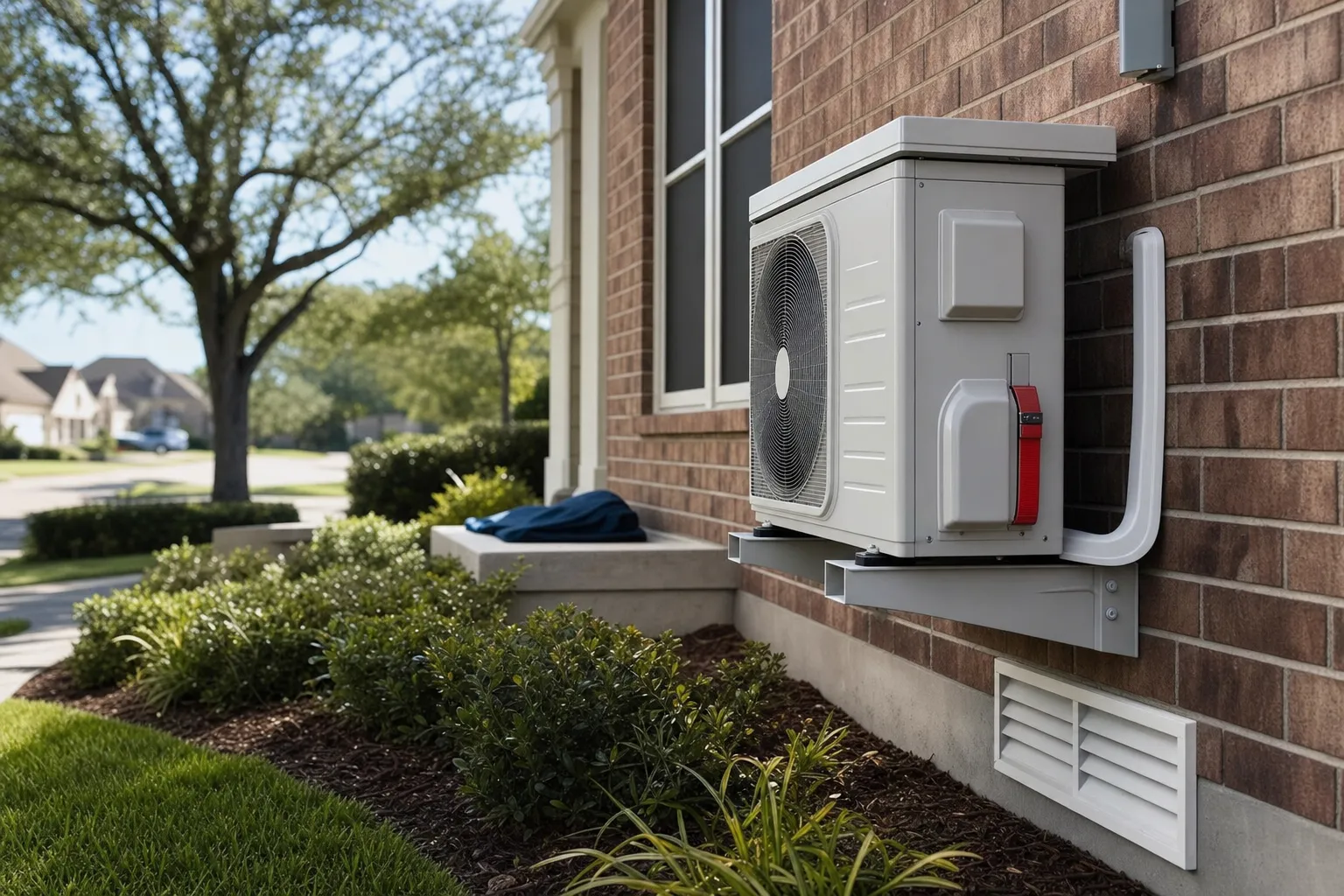
Ductless installation matters because correct equipment sizing, placement, refrigerant routing and electrical work determine the system s performance, efficiency and long term reliability. We explain what to look for, what can go wrong, and how we approach ductless installations in Houston to protect comfort and indoor air quality.
What is a ductless installation
Ductless systems, often called ductless mini splits, move conditioned air between an outdoor compressor and one or more indoor air handlers without ductwork. Installation covers site evaluation, equipment selection, mounting of indoor and outdoor units, refrigerant line routing, electrical connections, controls setup and final commissioning. For homeowners and business owners in Houston, that work determines how well a ductless system handles humid summers and variable occupancy.
Why installation decisions matter in Houston
Houston s climate and typical building stock make installation choices more important than in milder areas. High humidity affects dehumidification, older homes may lack dedicated electrical circuits, and dense neighborhoods limit where outdoor units can be placed. A correct installation keeps systems efficient, avoids short cycling, prevents refrigerant leaks and reduces the likelihood of premature component failure.
We are a licensed and insured HVAC contractor serving Houston and nearby communities. Our technicians follow industry practices to meet local code and performance expectations.
Key concepts every property owner should understand
- Sizing and load calculation. Manual J style load calculations make sure each indoor unit is the right capacity for the conditioned space. Oversized units will cycle on and off which reduces dehumidification and can shorten equipment life.
- Equipment placement. Indoor handler location affects comfort, noise and airflow patterns. Outdoor unit placement affects airflow, service access and sound reaching neighbors.
- Refrigerant routing and line length. Line sets must stay within manufacturer limits for length and elevation change to protect performance and warranty.
- Electrical service and disconnects. Ductless outdoor units often need a dedicated circuit and a local disconnect. Proper wiring and protection prevent nuisance trips and safety issues.
- Controls and zoning. Ductless systems provide room by room control. Proper control wiring and thermostat setup are required to match how you live or work.
- Ventilation and indoor air quality. Ductless systems condition room air but do not provide whole building ventilation. Complementary ventilation or filtration may be needed for occupied spaces.
Common installation choices and tradeoffs
Single zone versus multi zone
Single zone systems serve one indoor unit from one outdoor compressor. Multi zone systems run several indoor units from one outdoor unit. Single zone is simpler and often cheaper up front. Multi zone reduces outdoor footprint and can be more efficient when multiple areas need conditioning, but it adds complexity to refrigerant piping and controls.
Indoor unit styles
Wall mounted units are most common for living rooms and bedrooms. Ceiling mounted cassette units spread air more evenly and are better for open commercial spaces. Floor mounted handlers can suit rooms with low wall space. Each style has different clearance and mounting requirements installers must respect.
Line set routing options
Line sets can be routed through exterior walls, soffits, attics or basements. Exterior wall routing keeps runs short and serviceable. Attic or crawl space routing hides piping but can lengthen runs and complicate future repairs. In Houston, we balance weather exposure, ease of access and refrigerant line length limits.
What we check during a site evaluation
Before we recommend equipment, we perform a site evaluation that covers the items below. The evaluation identifies constraints and clarifies what will deliver the best long term outcome.
- Measure the spaces. We measure conditioned areas and note orientation, windows and shading to determine heating and cooling loads.
- Inspect the electrical service. We verify panel capacity, available breakers and whether a dedicated circuit is needed.
- Confirm mounting locations. We identify candidate wall or ceiling locations for indoor handlers and a serviceable location for the outdoor unit.
- Route review. We plan the line set route and check for obstacles such as masonry, stucco, or narrow soffits.
- Ventilation needs. We note whether the space needs whole building ventilation or improved filtration to meet indoor air quality goals.
- Access and permits. We check if local permits or condominium approvals are required and whether neighbors or HOA rules affect outdoor unit placement.
Installation day and what to expect
We answer the key expectations so you can plan the day. A thorough install sequence protects performance and the manufacturer warranty.
- Arrival and layout. We confirm locations for indoor handlers and the outdoor unit, and protect floors and landscaping.
- Mounting indoor units. We install mounting brackets or recessed supports and test structural integrity.
- Drilling and line set work. We route refrigerant lines, condensate drains and control wiring. We use insulating and protective covers where lines pass through walls.
- Outdoor unit installation. We set the outdoor unit on a pad or mounted bracket that prevents standing water and reduces vibration transmission.
- Evacuation and charging. We pull a vacuum on the refrigerant lines and charge the system according to the manufacturer s specifications.
- Controls and commissioning. We connect controls, test each zone, check airflow and verify dehumidification performance. We explain operation and maintenance items before we leave.
Pro tip: Ask the installer to show measured refrigerant pressures and the final electrical breaker size. Those readings are useful for future service and warranty claims.
Checklist for a durable ductless installation
Before you schedule installation
- Confirm the installer did a load calculation and provided an equipment schedule.
- Check that the proposed outdoor unit location meets spacing and noise considerations.
- Verify the plan for line set routing and access for future service.
- Ask if the installer will secure any required permits or inspections.
Comparison: ductless systems versus central air in installation terms
| Feature | Ductless systems | Central air systems |
|---|---|---|
| Installation complexity | Moderate, focused on multiple indoor mounting points and refrigerant routing | High when ducts need to be installed or modified |
| Space impact | Minimal interior intrusion, smaller outdoor footprint when multi zone | Requires duct runs and often larger outdoor equipment |
| Control and zoning | Room by room control built in | Zoning requires dampers and additional controls |
| Ventilation | Does not provide whole house ventilation by default | Ducts can be used for balanced ventilation with the right equipment |
Permits, codes and warranties
Local building codes and manufacturer warranty terms shape how installations are done. Many manufacturers require certified installers and documented commissioning for full warranty coverage. We follow local code and common industry practices. For national guidance on refrigerant handling and installation standards see the Air Conditioning Contractors of America standards page at acca.org standards. For general information on ductless heat pump technology and energy use, the U.S. Department of Energy maintains a useful overview at energy.gov ductless heat pumps.
Costs and long term value factors to consider
Installation cost varies with the number of indoor units, the length of line sets, required electrical upgrades and whether structural work is needed. Long term value comes from proper sizing, quality commissioning and routine maintenance. We focus on efficiency and indoor air quality to control operating costs over the life of the equipment. For labor market and broader HVAC industry context, see the Bureau of Labor Statistics profile for heating, air conditioning and refrigeration mechanics and installers at bls.gov.
Related services and next steps
Installing a ductless system often touches other services. We link below to pages that explain these related topics in more detail.
- For system choice and ongoing care see our Ductless Systems service page.
- If you already have a ducted system and want a comparison, read our topic on Ductless Vs Central AC.
- For properly sized installs refer to our related topic on Ductless System Sizing.
Where in Houston this matters most
Older bungalows in the Heights, townhomes in Montrose and converted commercial spaces in the downtown area commonly lack ductwork or have constrained electrical service. Those properties benefit from careful planning about outdoor unit location, line set runs and drainage. If you want to see examples of our broader service area and locations we serve, visit our Locations hub.
Key takeaway
Correct ductless installation is more than placing an indoor unit on a wall. Sizing, placement, refrigerant routing, electrical work, and ventilation determine comfort, energy use and equipment life. We recommend a professional site evaluation and a documented install plan to protect performance and warranty in Houston s climate.
Frequently asked questions
How do you determine the right size for a ductless indoor unit?
We use room by room load calculations that account for square footage, ceiling height, window area, occupancy and insulation. That approach prevents oversizing which can reduce dehumidification and comfort.
Will a ductless system handle Houston humidity?
Yes, when the system is sized and commissioned correctly. Proper airflow and run time are essential for dehumidification. In some spaces we recommend supplemental ventilation or dedicated dehumidification to meet comfort goals.
How long does a typical installation take?
A single zone replacement can often be completed in a day. Multi zone installs with several indoor units usually require one to three days depending on access and line set routing.
Do ductless systems require special maintenance?
Maintenance is straightforward but important. It includes cleaning or replacing filters, inspecting condensate drains, and annual system checks. Regular maintenance keeps efficiency high and prevents avoidable repairs.
Learn more and see our reviews
Read customer reviews, get directions and view our Google Business Profile to learn more about our work in Houston, Texas. For related topics and services, visit our Topics hub, our HVAC Contractor page and our Ductless Systems service page.
We are licensed and insured and provide installation, repair and maintenance across Houston and nearby communities.