
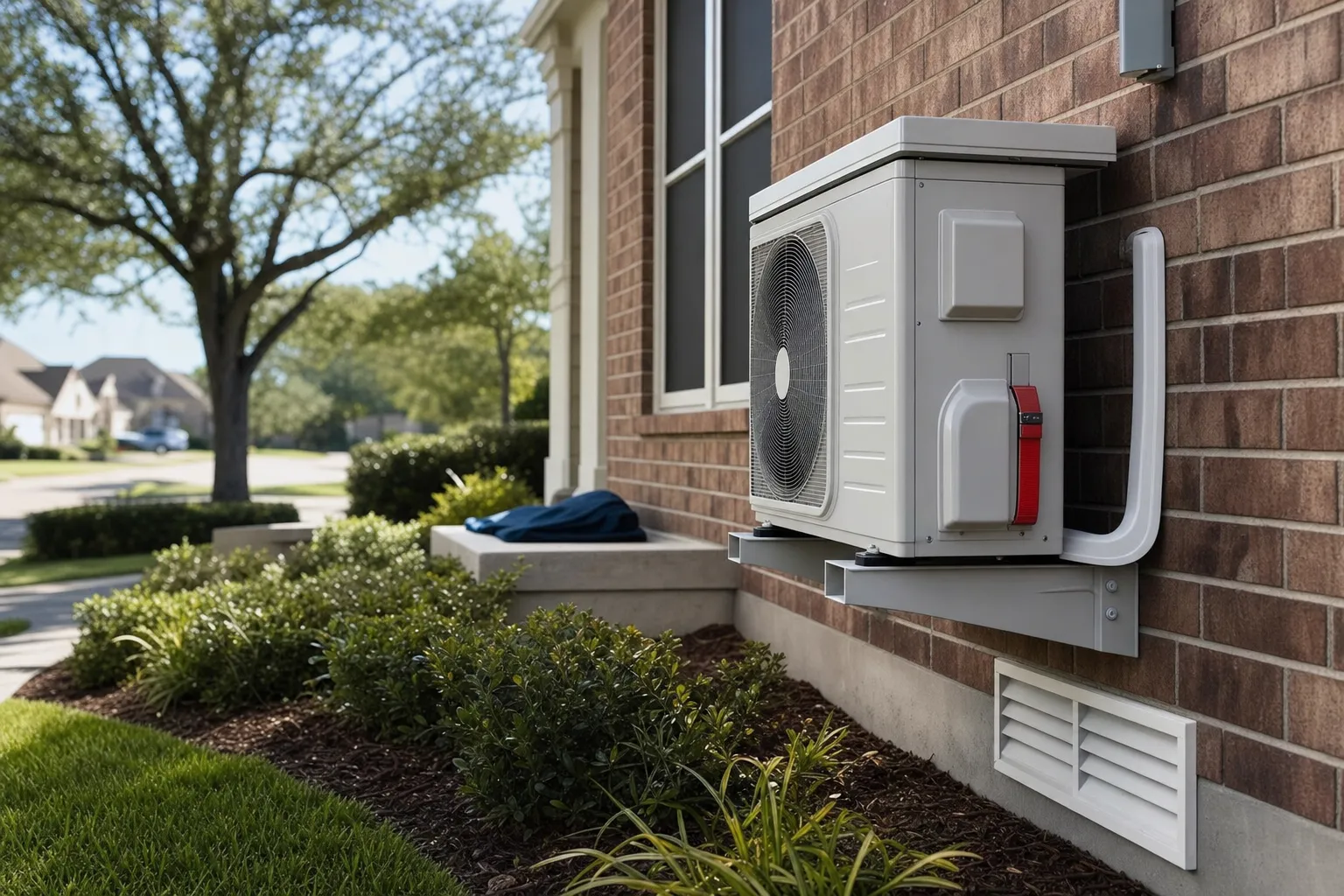
Ask whether the contractor will size the system, estimate annual operating costs, inspect the ductwork, confirm licenses and insurance, explain available efficiency upgrades, and outline a maintenance plan. Those answers tell you whether an installation or replacement will deliver real energy savings in Houston.
What is energy efficient HVAC and why it matters in Houston
Energy efficient HVAC refers to heating and cooling systems and supporting work that lower the energy needed to keep a building comfortable while preserving indoor air quality. In Houston, where summers are long and humidity is high, efficiency translates directly to lower cooling bills and longer equipment life.
We focus on energy efficient solutions because they reduce operating cost, improve comfort through better temperature and humidity control, and limit equipment wear. For homeowners and businesses in Houston, the difference between a correctly sized, efficient system and an undersized or poorly matched system is visible in monthly bills and in how steady indoor temperatures stay during heat waves.
Key concepts to understand before you start
- System sizing. Correct load calculation prevents short cycling, poor humidity control, and higher energy use.
- SEER and AFUE ratings. Seasonal Energy Efficiency Ratio and Annual Fuel Utilization Efficiency indicate how efficiently an air conditioner or furnace converts energy into cooling or heat.
- Airflow and ducts. Leaky or badly sized ducts can erase efficiency gains from new equipment.
- Refrigerant type. Newer refrigerants perform differently and may affect future service and costs.
- Controls and thermostats. Programmable or smart thermostats and zoning improve comfort and reduce runtime.
- Indoor air quality. Filters, ventilation, and humidity control affect comfort and system load.
- Maintenance. Planned tune ups keep efficiency where it should be over the equipment life.
Questions to ask the contractor, grouped by priority
We recommend asking these questions in the first meeting. They are grouped so you can focus on what matters most for energy efficiency, safety, and long term performance.
Licensing, insurance and professional credentials
- Are you licensed to perform HVAC work in Texas and registered where required? We confirm licensing early because it affects permits and code compliance. For background on industry definitions, see the HVAC entry on Wikipedia.
- Can you provide proof of insurance and worker coverage for the crew on site?
- Do your technicians carry manufacturer training or trade association credentials such as membership in industry groups?
Sizing and system selection
- Will you perform a load calculation such as Manual J for this building? Accurate sizing is the single biggest factor in getting the promised efficiency.
- What efficiency ratings do you recommend for this home or building, and why? Ask for SEER, EER or AFUE values where applicable.
- How will you account for Houston climate factors like humidity and solar gain?
Ductwork, airflow and distribution
- Will you inspect the duct system and measure airflow before and after installation?
- If duct repairs or modifications are required, how will you scope that work and what standards do you use for leakage and balancing?
Equipment, refrigerant and controls
- Which brands and models do you recommend, and what features affect operating cost rather than sticker efficiency?
- What refrigerant will the new system use, and how does that affect serviceability and future regulations?
- Do you include thermostat setup, zoning, and commissioning of controls as part of the project?
Warranties, performance assurances and service
- What manufacturer and workmanship warranties come with the equipment and installation?
- Do you offer routine maintenance agreements and what is covered during a tune up?
- How do you measure and document system performance after installation?
Permits, code and safety
- Who pulls the permit and handles inspections required by the city or county?
- How will you ensure the work complies with local mechanical and building codes and with refrigerant handling rules?
Cost, timeline and project management
- Can you outline stages of the project and expected timeline from permit to commissioning?
- What tradeoffs affect cost versus lifetime operating expense, for example higher efficiency equipment versus improved duct sealing?
How we assess energy savings and operating cost
When we propose energy efficient options we estimate annual energy use based on equipment efficiency, local weather, and expected runtime. Instead of promising a fixed dollar savings, we explain the assumptions behind the estimate so you can see how behavior, thermostat settings, and insulation affect outcomes.
Ask the contractor to show the calculation and the assumptions for hours of operation, local cooling degree days, and expected thermostat setpoints. If a contractor cannot explain the assumptions, that is a red flag.
Practical interview steps when you meet contractors
- Prepare documentation. Gather utility bills for the last 12 months, any existing equipment labels, and recent service records. We use utility history to validate runtime assumptions.
- Walk the property together. Ask the contractor to inspect the equipment, the duct layout, attic and crawlspace access, and the outdoor condenser location.
- Request a written scope. Ask for a clear scope that defines equipment models, efficiency ratings, duct work tasks, permits, and post installation testing.
- Compare performance documents. Require a summary of expected efficiency, anticipated operating costs, and how the system will be tested on completion.
Checklist before you sign an agreement
Pre project checklist
- Written scope with equipment model numbers and efficiency ratings.
- Load calculation documented and attached to the proposal.
- Duct inspection notes and proposed repairs listed separately.
- Warranty details for equipment and workmanship in writing.
- Permit responsibility and timeline explained.
- Maintenance plan and first tune up schedule included.
- Commissioning plan with airflow and refrigerant charge verification.
Common misunderstandings and objections
Customers often assume a bigger unit is more efficient or that a new high SEER unit alone solves comfort issues. We explain why those assumptions are incomplete. Bigger than necessary equipment often runs poorly for dehumidification. New equipment installed on leaky ducts will not deliver the claimed savings.
Another common misconception is that higher SEER always means lower lifetime cost. Higher efficiency units generally cost more up front. The right choice depends on your usage, how long you plan to stay in the building, and whether supporting work such as duct sealing is needed.
Related services we typically coordinate
Energy efficient HVAC work is rarely just a swap of outdoor and indoor units. We often coordinate these services to make the system perform as expected.
- HVAC Contractor, for project management, permitting and full installations.
- HVAC Maintenance, to keep equipment at peak efficiency after installation.
- Air Duct Services, to repair, seal and balance ducts so new equipment performs correctly.
How local codes and incentives affect the project
Permits and code compliance in Texas affect insulation, mechanical ventilation, and refrigerant handling. We handle permit pulls and inspections because compliance is a condition of safe and legal work. For licensing and state requirements, the Texas Department of Licensing and Regulation provides details about air conditioning and refrigeration contractors at the TDLR website.
Also look for local utility or state incentives that can reduce upfront costs for high efficiency equipment. Utility programs change frequently, so ask contractors how they check available rebates during proposal preparation.
Comparison of common efficiency upgrades
| Upgrade | What it changes | When to choose it |
|---|---|---|
| Higher SEER air conditioner | Lower electric use per hour of cooling, better part load performance | When runtime is high and the duct system is in good condition |
| Variable speed air handler | Smoother airflow, improved humidity control, reduced short cycling | When humidity control matters and you want quieter operation |
| Duct sealing and insulation | Reduces distribution losses and improves room by room balance | When ducts are old, in the attic, or show signs of leakage |
What good workmanship looks like on site
- Neat, labeled refrigerant lines and secure mounting of outdoor equipment.
- Proper termination of condensate lines to approved drains or pumps.
- Measured airflow and documented refrigerant charge with a commissioning report.
- Clean, accessible filter locations and clear instructions for maintenance.
Pro tip: Ask to see the commissioning report and airflow numbers for the installed system. Those figures show whether the equipment was tuned to expected performance.
When to consider repair versus replacement
Repairing a system can be the right choice for recent equipment with a single failure. Replacement becomes more attractive when the system is old, uses obsolete refrigerant, or when repeated failures suggest underlying wear. For a deeper look, see our topic on Repair Versus Replace.
Pros
- Repair keeps upfront cost lower when failure is isolated.
- Replacement provides better efficiency and reduced long term maintenance.
Cons
- Repeated repairs can add up and mask larger system shortfalls.
- Replacement requires upfront capital and careful selection to realize savings.
Questions specific to commercial and multiunit buildings
For landlords, property managers and small business owners, also ask about load diversity, central plant options, and service agreements that match business hours. Multiunit buildings may need zoning strategies or multiple systems to achieve efficient control without oversizing.
Helpful external resources
For background on HVAC concepts and standards, these sources are useful. We refer to them when explaining code and best practices.
- Heating ventilation and air conditioning on Wikipedia for general definitions and terminology.
- Texas Department of Licensing and Regulation information on air conditioning and refrigeration for licensing and regulatory guidance.
- Air Conditioning Contractors of America for contractor standards, manuals and best practices.
Key takeaway
Key takeaway
Ask your contractor to document load calculations, ductwork condition, expected operating cost, equipment models and commissioning tests. Those elements determine whether an energy efficient HVAC project will deliver the savings and comfort you expect in Houston.
Frequently asked questions
What is a load calculation and why does it matter?
A load calculation estimates the heating and cooling needs of your building based on square footage, insulation, orientation, windows and occupancy. It is crucial because correct sizing keeps the system running efficiently and maintains humidity control.
How much does a higher SEER unit save on energy bills?
Savings vary with climate, runtime and thermostat settings. Instead of promising a single number, we show the assumptions behind savings estimates so you can see how usage patterns affect outcome.
Should I repair my current system or replace it with a high efficiency model?
Repair is reasonable for recent equipment with a single issue. Replacement is preferable when the system is old, uses phased out refrigerant, or when frequent failures indicate age related decline. Consider total operating cost, not only upfront price.
Do I need new ductwork when I install a high efficiency HVAC system?
Not always, but ducts are often the limiting factor. Leaks, poor routing, and inadequate insulation reduce the benefit of high efficiency equipment. We inspect ducts and recommend targeted repairs where they improve performance most.
Who pulls permits and arranges inspections?
Permit responsibility should be clear in the proposal. We handle permit preparation and inspections when we manage a full installation, because code compliance is part of delivering safe, long lasting work.
Where to learn more and check our local reputation
Check Cool Care Heating and Air Conditioning on Google to read recent customer reviews and to get directions. For more detail on efficient system options, see our Energy Efficient HVAC topic, explore our HVAC Contractor service information, or review our location pages to confirm service areas.