
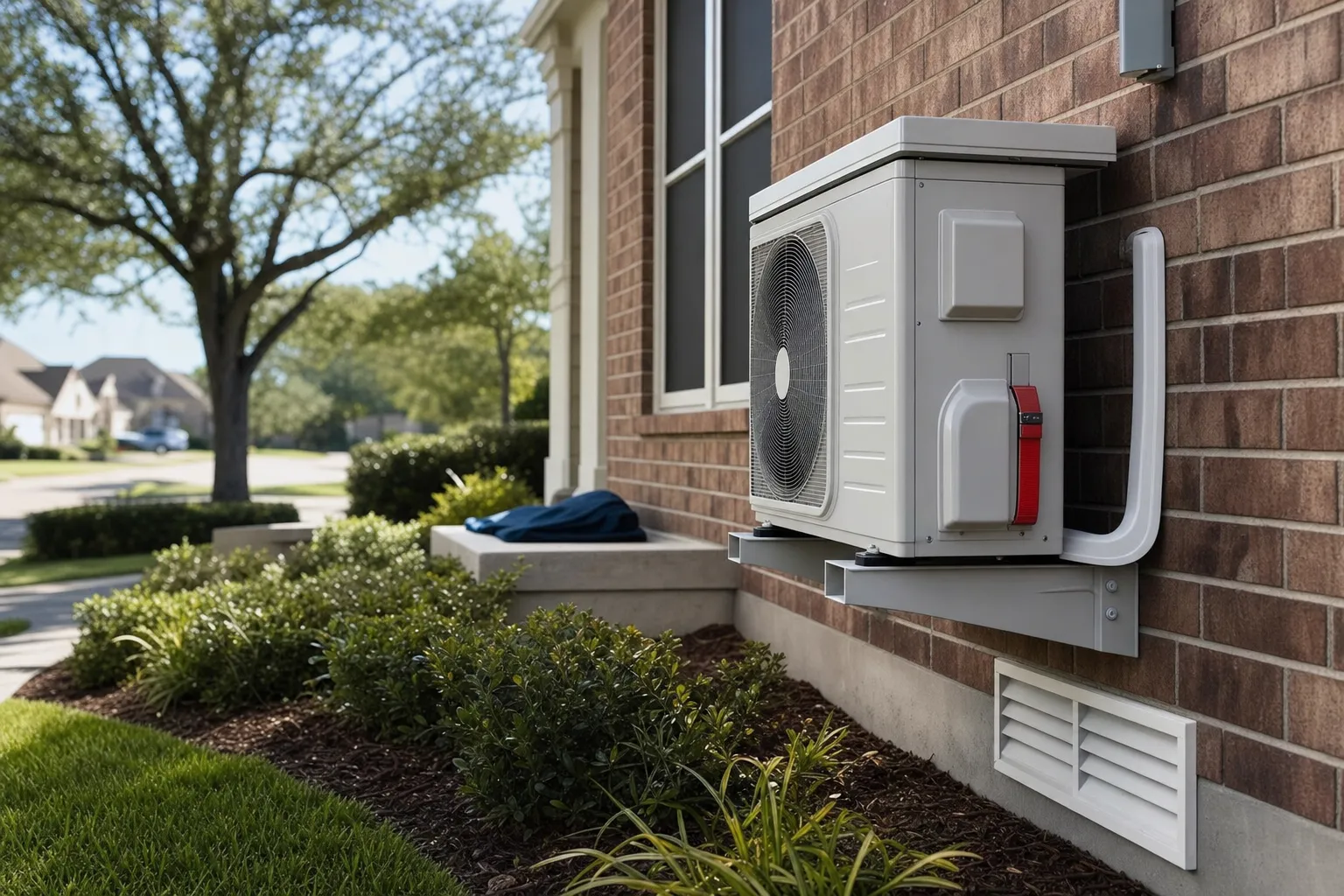
If you are choosing help with home air purification, focus first on how the provider evaluates your home and the specific technologies they propose. A proper review includes a site assessment or test, clear explanation of filtration options, compatibility with your HVAC system, and a maintenance plan you understand.
What is home air purification
Home air purification includes any equipment or service intended to reduce airborne particles, allergens, odors, volatile organic compounds, or microbes inside a living or working space. That can mean whole home systems that work with the central HVAC, portable air cleaners for single rooms, or supplemental devices like UV germicidal lights and activated carbon filters. We install and service whole home systems as part of our Indoor Air Quality offerings and we advise customers on where portable units make sense.
Why this review matters in Houston
Houston homes and buildings face high humidity, pollen, ozone, and periodic outdoor smoke. Those local conditions change the tradeoffs you should weigh when choosing purification. For example, high humidity increases the risk of mold growth, which makes proper ventilation and humidity control more important than a room purifier alone. We factor Houston weather, building types, and common duct layouts into every recommendation so the solution works year round and does not overload your HVAC system.
Key concepts to understand
- Testing and assessment. Preinstallation testing shows particle counts, relative humidity, and common contaminants so recommendations are evidence based.
- Filtration efficiency. MERV ratings and HEPA performance are not interchangeable; MERV relates to HVAC filters and HEPA to standalone cleaners.
- Whole home versus portable solutions. Coverage, noise, energy use, and maintenance differ between approaches.
- System compatibility. Some whole home purifiers add pressure on duct fans or require specific returns and cabinet space.
- Ongoing maintenance. Filters, lamps, and sensors need scheduled replacement or service to remain effective.
Checklist, what to review before you choose help
Essential items to confirm
- The provider performs or reviews an indoor air assessment, including particle counts or humidity measurements.
- They explain why a proposed technology solves your actual problem, for example particulate removal, odor control, or humidity management.
- They review compatibility with your central HVAC, including airflow and cabinet space.
- They provide a clear maintenance plan listing filter types, replacement intervals, and any required cleaning.
- They discuss energy implications, noise levels, and expected operating costs.
- They link the recommendation to building factors common in Houston, such as attic duct runs or slab foundations.
Comparing whole home systems and portable air cleaners
| Feature | Whole home purifier | Portable cleaner |
|---|---|---|
| Coverage | Works across all conditioned spaces when integrated with the HVAC | Limited to one room or area at a time |
| Integration | Installed in the air handler or ductwork, can affect airflow | No HVAC modification required |
| Filtration media | MERV rated filters, electrostatic or electronic options, some include UV | HEPA and activated carbon commonly used |
| Maintenance | Periodic filter changes and system checks at the air handler | Filter replacement and occasional surface cleaning |
| Best use | Whole house control for allergy sufferers or continuous particulate management | Targeted use in bedrooms, offices, or during short term events such as wildfire smoke |
How we assess your home
When we evaluate a home for air purification, we take a systematic approach. First we review system history and occupant concerns. Then we inspect duct accessibility, return locations, and the air handler. If warranted, we measure particle counts, humidity, and airflow. That information tells us whether a filter upgrade, a dedicated whole home purifier, improved ventilation, or a portable cleaner is the right choice. Our focus is to match technology to the actual contaminant profile and to the practical constraints of Houston residences.
Pro tip: If you have frequent allergies or sensitive occupants, ask for measured particle counts before accepting a proposal. Measured data makes it easier to compare options and to verify results after installation.
Related services that affect outcomes
Home air purification often works best alongside other HVAC services. We commonly coordinate with our air duct services to ensure ducts are clean and leaks are repaired. We also consider routine HVAC maintenance to keep filters and blowers operating correctly. When assessing options, review how the purification proposal interacts with these services because combined improvements usually deliver better results.
Common questions homeowners in Houston ask
We answer the frequent questions we hear so you can evaluate proposals with confidence.
- Do I need a whole home system or a portable cleaner. If contaminants affect multiple rooms or if you want continuous control, whole home systems are usually preferable. Portable units make sense for focused problems or short term events.
- What filter rating should I choose. For HVAC filters, MERV 8 to MERV 13 is common; higher MERV improves particle capture but may increase resistance on older blowers. HEPA is standard for standalone cleaners. Read more about filter choices in our article on air filter selection.
- Will a purifier fix mold and moisture. Purifiers remove airborne spores but do not resolve the moisture source. For mold concerns, pair air quality work with humidity control and targeted remediation.
Related locations and why they matter
Neighborhoods and building types across Houston change the practical choice of equipment. Older homes with long duct runs or attic systems often need different strategies than newer slab on grade houses. For a local overview of where we serve and the building types we encounter, see our locations page.
Helpful resources and references
Authoritative sources that explain standards and background include the U.S. Environmental Protection Agency for indoor air quality basics, the HVAC entry on Wikipedia for general background, and manufacturer documentation for specific filters and UV devices. We encourage checking these resources when you compare proposals.
Key takeaway
Focus on measured needs, system compatibility, maintenance, and how the proposed technology addresses the specific contaminants in your Houston home. That approach reduces surprises and improves long term results.
Frequently asked questions
What tests are useful before buying a home air purifier?
Particle counters, humidity readings, and a visual duct inspection are the most useful. Test results let you match technology to the problem and provide a baseline for verification after installation.
How often do filters and UV lamps need replacement?
Replacement intervals vary by product and use. HVAC filters are commonly replaced every 3 to 12 months depending on MERV rating and occupancy. UV lamps typically need replacement every 9 to 18 months. Confirm intervals with the product documentation and your service technician.
Can high MERV filters harm my existing HVAC system?
High MERV filters increase airflow resistance. On older or undersized blowers that can reduce airflow and efficiency. A system assessment will show whether a higher MERV is acceptable or if alternative approaches are better.
Are portable HEPA cleaners effective during wildfire smoke events?
Yes, portable HEPA cleaners can reduce indoor particle levels in a single room, and they are especially useful during short term events. For whole home protection during extended events, a whole home filtration strategy combined with sealed ventilation is preferable.
How do I verify a purification system is working after installation?
Request post installation particle or air quality measurements and a clear maintenance schedule. Measured improvements and documented servicing are the best verification methods.
Where to learn more
Check our Google Business Profile to read customer reviews and get directions. For additional reading on related topics, see our article collection on indoor air topics in Houston and our topics hub for guidance on filters, maintenance, and system selection.
Learn more about our Indoor Air Quality services on the service page for Indoor Air Quality.