
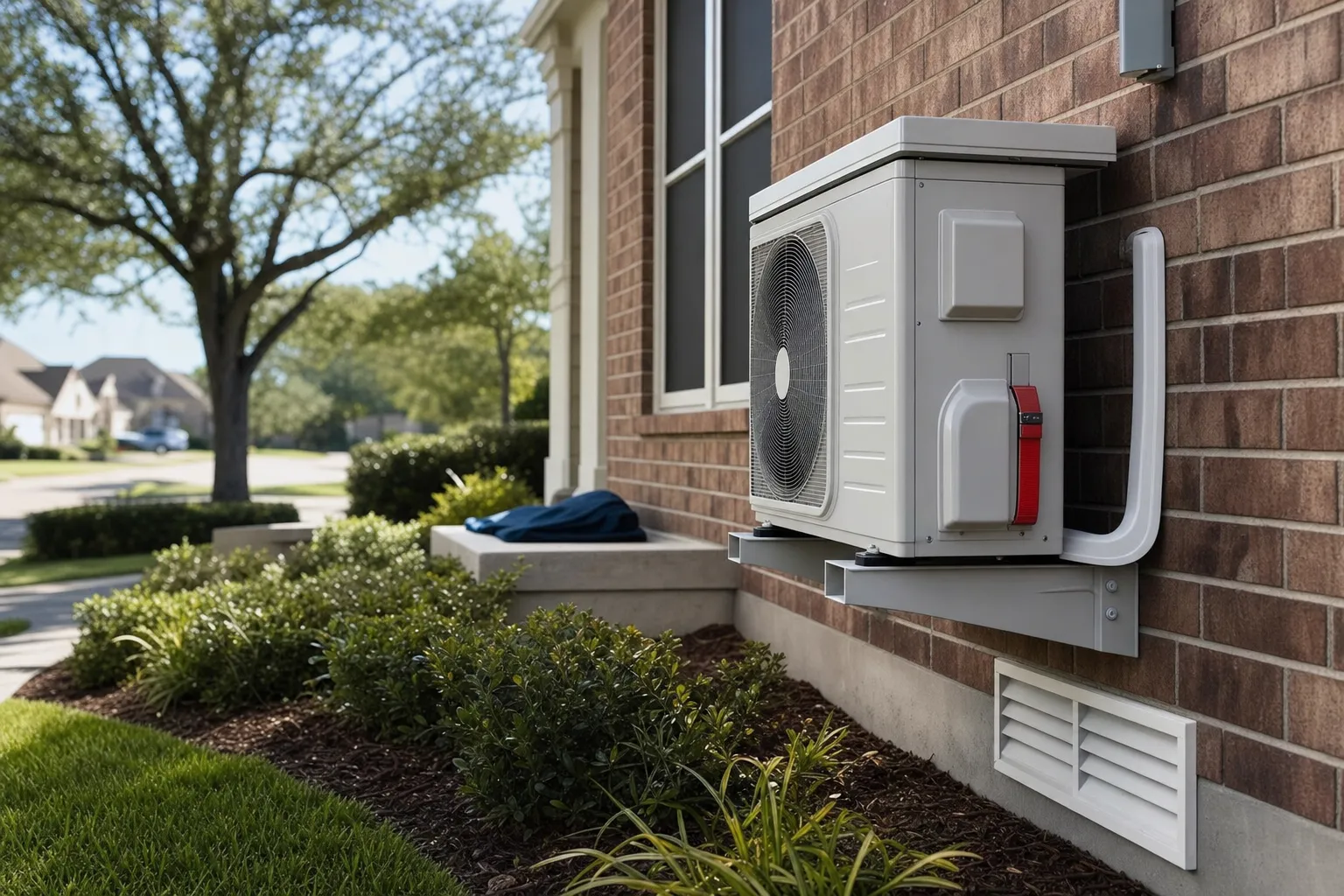
We recommend professional maintenance for ductless heat pump systems at least once a year, and more often if a system carries heavy use or serves a property with high humidity or airborne debris. Regular service keeps the system efficient, prevents unexpected breakdowns and helps extend equipment life.
What is heat pump maintenance for ductless systems
Ductless systems, often called mini splits, use an outdoor compressor and one or more indoor air handlers to heat and cool spaces without ductwork. Heat pump maintenance covers the routine inspection, cleaning and adjustment tasks a trained technician performs to keep those components running as intended.
When we work on ductless heat pumps we look at the outdoor unit, indoor air handlers, refrigerant circuit, electrical controls, condensate drainage and thermostat or control settings. Maintenance is preventative, not a repair visit. The goal is to find small problems before they become failures.
Why maintenance matters in Houston
Houston has long, hot summers and high humidity for much of the year. Those conditions place steady load on cooling systems and increase the risk that coils, filters and drain lines will collect dust, pollen and biological growth. Regular maintenance matters here because it:
- Preserves system efficiency, which helps control energy use during Houston summer months
- Reduces the chance of midseason failures when homes and businesses depend on cooling
- Helps maintain indoor air quality by keeping filters and coils clean
- Protects equipment from corrosion or debris that can build up in some neighborhoods and near coastal areas
Key concepts every owner should understand
- Refrigerant charge. Proper refrigerant levels are required for efficient heat transfer. Low charge signals a leak or improper servicing.
- Airflow and filters. Restricted airflow raises compressor stress and lowers comfort. Filter condition affects both airflow and indoor air quality.
- Coil cleanliness. Dirt on evaporator or condenser coils reduces heat exchange, increasing runtime and energy use.
- Condensate drainage. Clogged condensate lines can cause water damage and microbial growth at the indoor unit.
- Electrical connections and controls. Loose contacts, worn capacitors or damaged wiring create reliability and safety risks.
- Defrost and reversing valves. On heat pumps, defrost operation and reversing valves must function for winter heating and to protect outdoor coils.
What a professional service visit includes
- Visual inspection. We inspect outdoor and indoor units for physical damage, corrosion, insect nests and proper clearances.
- Filter and airflow check. We inspect and replace or recommend replacement filters, and test airflow at the indoor handlers.
- Coil cleaning. We clean evaporator and condenser coils when needed, using approved methods to avoid damaging fins.
- Electrical and control tests. We tighten connections, test capacitors and relays, and verify control communication between indoor and outdoor units.
- Refrigerant check. We check pressure and temperatures to spot low charge or performance issues. Refrigerant repair requires certified technicians.
- Condensate system service. We clear drain lines and inspect pans for standing water or growth.
- Performance verification. We measure temperatures, listen for abnormal noises, and confirm the system reaches setpoints efficiently.
Pro tip: Ask whether your technician is licensed and insured and whether they record performance readings when they service your heat pump. Those readings make future visits faster and more accurate.
Simple homeowner checks you can do between professional visits
Monthly quick checklist
- Inspect filters and replace or clean when visibly dirty
- Keep the outdoor unit clear of leaves, grass and debris
- Check indoor drainage for slow draining or visible water
- Confirm the remote or controller batteries and settings
These steps do not replace a professional tune up. They only help reduce the load on the system and spot obvious problems early.
DIY checks versus professional maintenance
| DIY checks | Professional maintenance |
|---|---|
| Replace filters, clear debris, basic visual inspection, minimal tools required | Detailed electrical testing, refrigerant checks and leak diagnosis, coil cleaning, component replacement, documented performance readings |
What we consider when deciding service frequency
We tailor maintenance frequency to the building, equipment and environment. Factors that increase recommended frequency include heavy daily run hours, pets, smoking indoors, nearby construction, and buildings in coastal or high pollen areas.
Watch out: Never attempt refrigerant repairs or electrical component replacements yourself. Those tasks require certified technicians and proper tools. Improper handling can void warranties or create safety hazards.
Common questions we hear
How often should I schedule maintenance
At minimum, have a professional inspect ductless heat pumps once a year. For properties with heavy cooling demand, high airborne debris, or multiple indoor units, twice a year is reasonable.
Will maintenance extend the equipment life
Regular maintenance lowers long term stress on compressors and motors and helps prevent issues that cause premature failure. It is one of the most effective ways to preserve useful life without replacing equipment early.
Does maintenance affect my warranty
Many manufacturers require proof of routine service for warranty claims. Keep service records and ask the technician to document readings and actions taken.
Can I clean coils myself
Light dusting of indoor blower faces is normally safe. Deep coil cleaning on an outdoor or indoor coil should be left to professionals who use the correct cleaners and pressure to avoid fin damage.
Related services we provide
Maintenance often uncovers or prevents issues that need repair or further attention. We provide HVAC repair and full HVAC maintenance for both ductless and central systems. We also assess indoor air quality and perform air duct services when airflow improvements are needed.
Learn more about our Ductless Systems service, our HVAC Maintenance offering, and HVAC Repair work.
Ductless systems service page · HVAC Maintenance service page · HVAC Repair service page
Related locations and neighborhoods we serve
We are based in Houston and work across the city and nearby communities. We see ductless systems in single family homes, apartments and small commercial spaces in neighborhoods such as The Heights, Montrose and Memorial. For a detailed view of the areas we cover, see our locations page.
Helpful resources and further reading
To learn more about how heat pumps work, the U.S. Department of Energy has an overview of heat pump basics and energy considerations. For a technical background on heat pump principles, see the Encyclopedia entry on heat pumps.
U.S. Department of Energy heat pump guide · Heat pump background
Practical signs your ductless heat pump needs service
- Reduced cooling or heating capacity with longer run times
- Unusual noises or frequent cycling on and off
- Higher than normal energy bills without a usage change
- Visible frost or ice buildup on the outdoor unit in heating mode
- Recurring condensate overflows or foul drain smells
Key takeaway
Regular, professional maintenance keeps ductless heat pump systems in Houston running efficiently and reliably. We recommend scheduled inspections by licensed and insured technicians, combined with simple monthly checks by the owner, to protect comfort and reduce operating costs.
Frequently asked questions
What does a ductless heat pump tune up cost
Costs vary by system size, number of indoor units and the extent of work. For accurate pricing, check locally listed service pages or request an inspection through our service contact options.
Can maintenance fix a refrigerant leak
Maintenance can identify signs of a leak, such as low pressures or poor performance. Repairing a refrigerant leak requires certified technicians, trace detection, and proper recovery and recharge procedures.
How long does a maintenance visit usually take
A typical preventive visit for a single indoor unit usually takes 45 to 90 minutes. Multi zone systems require more time depending on the number of indoor handlers and complexity.
Is there a checklist I can use before a technician arrives
Yes. Have filters accessible, clear 2 to 3 feet of space around the outdoor unit, note any unusual noises or odors, and list thermostat settings that seem incorrect. This helps the technician diagnose issues faster.
Where to check our reviews and learn more
Find Cool Care Heating and Air Conditioning on Google to read recent customer reviews and get directions. For deeper reading about maintenance and related topics, visit our resource pages and service pages.